In industry, vacuum pumps play a key role in many production, handling, and processing operations. They generate the vacuum required to convey, grip, hold, package, or process a wide range of materials, gases, and industrial products.
Industrial vacuum technology is used across many sectors, including food processing, plastics, chemicals, healthcare, woodworking, metalworking, and pneumatic conveying.
Depending on the application, different vacuum pump technologies can be used, including diaphragm pumps, screw vacuum pumps, claw pumps, piston pumps, dry and oil-lubricated rotary vane pumps, Roots vacuum boosters, liquid ring vacuum pumps, and blower-based vacuum systems.
As a distributor and integrator of industrial vacuum solutions, GEFI has been supporting manufacturers for many years across sectors such as plastics, food processing, woodworking, chemicals, gas treatment, and pneumatic conveying. This field experience enables our teams to help customers select the vacuum technology best suited to their process and production requirements.
Understanding how an industrial vacuum pump works is an essential step in selecting equipment that delivers the required performance, reliability, and operating efficiency.
Table of contents
What is an industrial vacuum pump?
An industrial vacuum pump is a device designed to remove air or gases from an enclosed space in order to reduce the pressure inside it.
Contrary to a common misconception, a vacuum pump does not “create” a vacuum. Instead, it removes gas molecules from a system until the required vacuum level is reached.
As the number of gas molecules inside the system decreases, the pressure also decreases.
This principle is used in thousands of industrial applications. Some processes require only a moderate vacuum, while others operate at much lower absolute pressures.
Industrial vacuum technology can be used to hold components in place by suction, convey bulk materials, package food products, dry materials, recover or transfer gases, and support a wide range of chemical and manufacturing processes.
Choosing the right industrial vacuum pump depends on the application, the required vacuum level, the gas or material being handled, and the actual operating conditions.
Key components of a vacuum pump
Example based on an oil-lubricated rotary vane vacuum pump: “Add functional diagram”
Although vacuum pump designs vary considerably depending on the technology, an oil-lubricated rotary vane vacuum pump consists of several key components. The pump casing forms the main structure of the unit and contains the internal pumping mechanism while maintaining the airtight conditions required for vacuum generation.
The rotor is the main rotating component. Mounted eccentrically inside the pumping chamber, it carries sliding vanes that create chambers of varying volume. As the rotor turns, these chambers draw in, compress, and discharge the gas.
Filtration also plays an important role in protecting the vacuum pump and the process. Inlet filters can help prevent dust and contaminants from entering the pump, while oil mist separators are commonly used on the exhaust side of oil-lubricated rotary vane pumps. The oil itself provides lubrication, cooling, and sealing within the pumping mechanism.
Finally, the electric motor drives the pump, while the cooling system helps maintain suitable operating temperatures during continuous or demanding industrial use.
How a vacuum pump works
Most positive displacement vacuum pumps operate by removing gas molecules from a closed volume, thereby reducing the pressure inside the system.
When the pump starts, gas is drawn from the process into the pump inlet.
The gas is then trapped and transferred through the pumping mechanism. In technologies that use internal compression, its volume is progressively reduced before discharge.
Finally, the gas is expelled through the exhaust.
For many positive displacement vacuum pumps, the operating cycle can therefore be summarized in three main stages:
1. Gas intake.
2. Gas transfer and compression.
3. Discharge.
This cycle repeats continuously until the required vacuum level is reached or maintained.
As the pressure inside the system decreases, a pressure difference develops between the process and the surrounding atmosphere.
This pressure differential is what allows a suction cup to hold a load, a vacuum conveying system to transport material, or a thermoforming machine to draw a sheet against a mold.
How is vacuum measured?
Vacuum can be expressed using several pressure units.
Common units in industrial applications include millibar absolute, mbar(a), Pascal (Pa), and Torr. Vacuum may also be expressed as a percentage relative to atmospheric pressure in some applications.
In many European industrial applications, mbar(a) is commonly used to express absolute pressure.
It is important to understand that the lower the absolute pressure, the higher the vacuum level.
Examples:
· Atmospheric pressure: approximately 1,013 mbar(a).
· Vacuum level: 100 mbar(a).
· Deeper vacuum level: 1 mbar(a).
The lower the residual absolute pressure, the higher the vacuum.
Industrial vacuum levels
Not all industrial applications require the same vacuum level.
Rough vacuum covers a large proportion of common industrial applications, including packaging, vacuum handling, thermoforming, and pneumatic conveying.
Medium vacuum is used for processes requiring lower absolute pressures and more demanding vacuum performance.
High vacuum is generally associated with specialized industrial, scientific, laboratory, coating, analytical, and research applications.
In practice, a vacuum system should not be sized solely according to the target vacuum level.
The required pumping speed is equally important. A vacuum pump may be capable of reaching a very low ultimate pressure but still be unsuitable if it cannot provide the pumping capacity required by the process.
Main types of vacuum pumps
No single vacuum pump technology can meet the requirements of every industrial application. Each operating principle has its own advantages, limitations, and typical areas of use.
Choosing the right vacuum pump depends on the process, the required vacuum level, pumping speed, operating conditions, gas characteristics, and maintenance requirements.
Oil-lubricated rotary vane vacuum pumps
Oil-lubricated rotary vane vacuum pumps are among the most widely used technologies in industrial vacuum applications. They use an eccentrically mounted rotor fitted with sliding vanes that move inside the pump casing. As the rotor turns, the volume of the pumping chambers changes, allowing gas to be drawn in, compressed, and discharged.
The oil performs several essential functions, including lubrication, cooling, sealing, and protection of the internal components. This technology is particularly valued for its robust design, reliable operation, and attractive cost-performance ratio. It is widely used in packaging, food processing, plastics manufacturing, and centralized vacuum systems.
Liquid ring vacuum pumps use a seal liquid, typically water, to create a liquid ring inside the pump and provide sealing, cooling, and gas compression.
This design allows them to handle wet gases, condensable vapors, and gas streams containing moisture or liquid carryover that may be difficult to manage with other vacuum technologies.
They are particularly well suited to demanding operating conditions and processes involving high vapor loads, moisture, or condensation.
Liquid ring vacuum pumps are widely used in the chemical, pulp and paper, gas processing, food processing, and power generation industries.
TRAVAINI offers several ranges of liquid ring vacuum pumps designed for different vacuum levels, capacities, and operating conditions. The main product families include TRV, TRS, TRM, and TRH series, with models such as TRVA, TRVB, TRVX, TRSA, TRSC, TRSE, TRHA, TRHB, TRHC, and TRHE.
Screw and claw vacuum pumps
Dry screw and claw vacuum pumps are widely used in industrial applications requiring oil-free operation, reliable performance, and reduced maintenance.
Their compression elements operate without contact inside the pumping chamber, which helps limit wear and eliminates the need for oil lubrication within the compression process.
Depending on the design and operating conditions, these technologies can offer good energy efficiency, long maintenance intervals, and reliable continuous operation in demanding industrial environments.
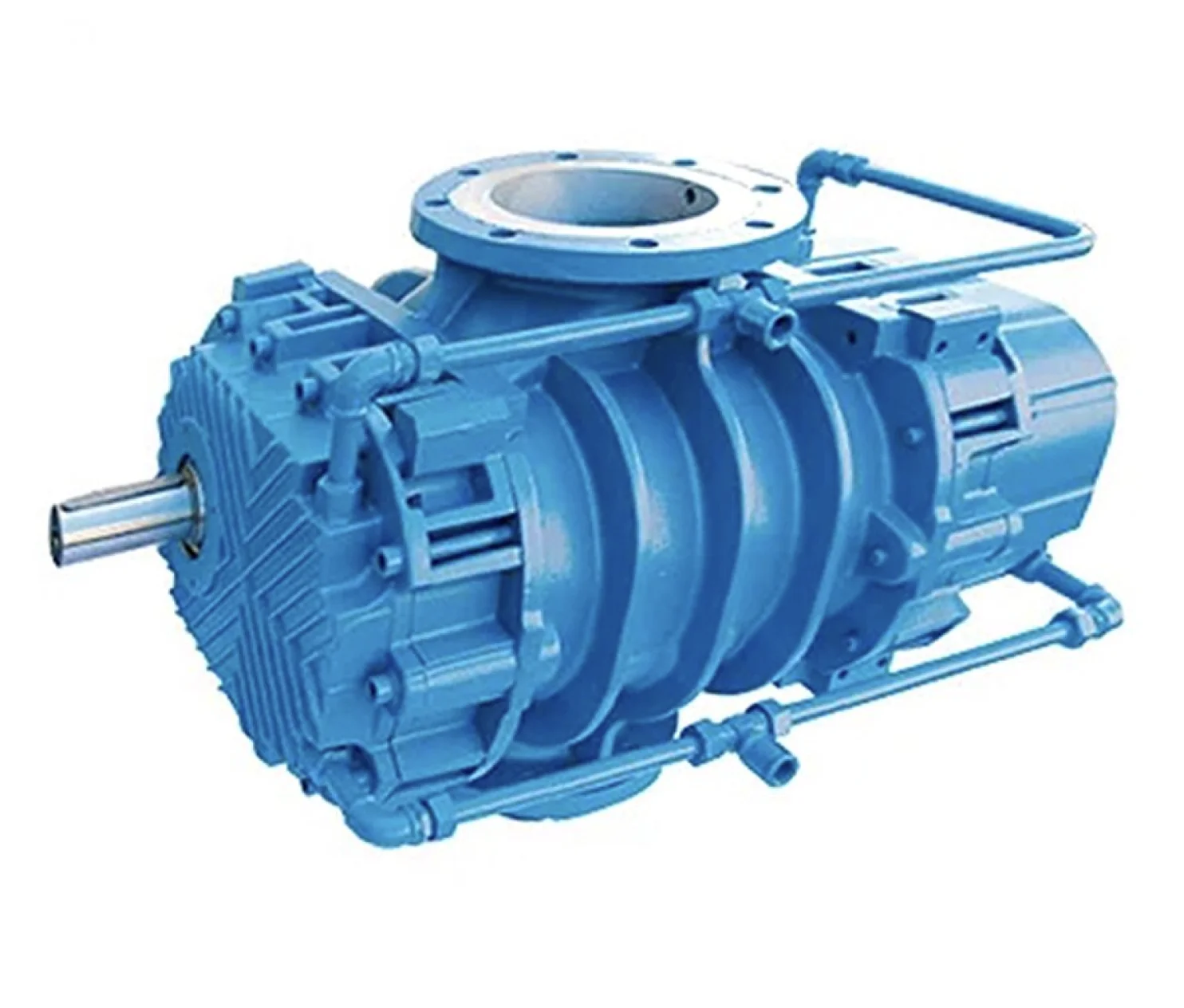
Roots vacuum boosters
Roots vacuum boosters are generally used in combination with a primary, or backing, vacuum pump rather than as standalone pumps.
They increase the pumping speed of the vacuum system and can help achieve lower operating pressures, particularly in applications requiring high pumping capacity.
They are commonly used in centralized vacuum systems, high-flow industrial processes, and applications requiring faster evacuation or increased pumping speed.
Industrial vacuum applications
Industrial vacuum technology is used across a wide range of industries. Each application has its own requirements in terms of vacuum level, pumping speed, operating conditions, and process constraints.
Plastics and thermoforming
In the plastics industry, vacuum plays an essential role in thermoforming processes.
The plastic sheet is heated until it becomes formable, and air is then removed from between the sheet and the mold. The resulting pressure differential draws the material against the mold surface.
Vacuum performance can directly influence forming accuracy, cycle time, and the quality of the finished part.
Food processing
In the food industry, vacuum is used for packaging, vacuum conveying of ingredients, drying, and various product handling operations.
The vacuum level and pumping capacity must be correctly controlled to maintain process performance, product quality, and production continuity. Equipment reliability is particularly important in applications operating continuously or at high production rates.
Pneumatic conveying
Vacuum pneumatic conveying allows powders, granules, and other bulk materials to be transported through pipelines using a controlled pressure differential.
In these systems, available pumping speed and airflow are often just as important as the vacuum level itself.
Incorrect sizing can result in insufficient conveying velocity, excessive pressure losses, blockages, reduced productivity, or unnecessary energy consumption.
At GEFI, we regularly encounter these issues when assessing existing installations as part of expansion, modernization, or process optimization projects.
Industrial handling
Vacuum is also widely used for gripping, lifting, and moving loads with suction cup systems.
Vacuum handling systems can be used for sheet metal, panels, cartons, glass, plastic components, and many other industrial products.
When correctly designed, these systems can improve productivity, automate repetitive handling operations, and reduce the need for manual lifting.
Chemicals and gas processing
In the chemical and gas processing industries, vacuum is used for operations such as degassing, evaporation, distillation, gas recovery, drying, and vacuum-assisted transfer.
Operating conditions can be particularly demanding because process gases may be wet, condensable, corrosive, or contaminated with particles.
Selecting the right vacuum pump technology, materials of construction, and operating configuration is therefore essential to achieving reliable and durable performance.
Need help choosing the right vacuum technology for your process?
Every industrial application has its own operating requirements. GEFI can carry out a technical assessment to identify the vacuum solution best suited to your process, performance objectives, and operating conditions.
Choosing the right vacuum pump involves more than simply selecting a model from a catalog.
Every industrial application has its own requirements in terms of operation, maintenance, performance, and energy efficiency.
The objective is to understand the entire process in order to recommend a vacuum solution that is reliable, efficient, and suited to actual operating conditions.
This is the approach adopted by GEFI as an industrial vacuum system integrator and solution provider.
Our teams support industrial customers with:
· Process and needs assessment.
· Vacuum system sizing.
· Vacuum pump technology selection.
· Energy optimization.
· Upgrading and optimization of existing installations.
This comprehensive approach enables us to recommend solutions based on real operating conditions rather than theoretical performance data alone.
GEFI works with established manufacturers and technologies in the industrial vacuum, pressure, and gas-handling sectors, including DVP Vacuum Technology, MD-Kinney, Pneumofore, Pedro Gil, FPZ, and Leybold. This broad technology portfolio allows us to recommend the solution best suited to the specific requirements of each application.
Field experience remains a key part of our approach. Every industrial project is different, and a solution that performs well in one installation may not be appropriate for another.
Our experience working with manufacturers across a wide range of industries helps us make informed technical recommendations and ensure that each system is designed to meet the required performance and operating conditions.
This practical, process-driven approach guides GEFI's recommendations.
Your questions about vacuum pumps
What is a vacuum pump used for?
A vacuum pump removes air or gases from a system to reduce the pressure and create the vacuum required for a wide range of industrial processes.
Can a vacuum pump run continuously?
Yes. Many industrial vacuum pumps are designed for continuous-duty operation and can run 24/7 when correctly sized, installed, and maintained.
Do vacuum pumps consume a lot of energy?
Energy consumption depends on the vacuum pump technology, system sizing, operating point, control strategy, and overall condition of the installation. Correct sizing and system optimization can help reduce unnecessary electricity consumption and operating costs.
What is the difference between a dry pump and a lubricated pump?
An oil-lubricated vacuum pump uses oil for lubrication, sealing, and cooling within the pumping mechanism.
A dry vacuum pump operates without oil or other lubricants in the compression chamber.
Which technology should I choose?
The choice depends on the required vacuum level, pumping speed, characteristics of the process gas, operating conditions, maintenance requirements, and energy efficiency objectives.
When should a vacuum pump be replaced?
Vacuum pump replacement may be considered when performance declines, maintenance requirements or costs increase, equipment reliability becomes an issue, or a newer technology could improve energy efficiency and overall system performance.
Our goal is to provide reliable, high-performance vacuum solutions that meet the actual operating requirements of your industrial process.
Do you have a project requiring an industrial vacuum solution?
GEFI experts help you select the vacuum technology best suited to your application.
Choosing the right vacuum pump involves more than simply comparing data sheets or technical specifications. In practice, two installations requiring similar vacuum levels may still need very different technologies. Several criteria should therefore be assessed together before selecting the most suitable solution.
The required vacuum level
The required vacuum level is one of the first parameters to consider. Some applications require only a moderate vacuum, while others operate at much lower absolute pressures. The objective is to achieve the required process performance without unnecessarily oversizing the system or increasing energy consumption.
The required pumping speed
Pumping speed represents the volume of gas the vacuum pump must remove within a given period of time.
This parameter is often underestimated during the initial design stage.
However, a pump capable of reaching the required vacuum level may still be unsuitable if it cannot provide the pumping capacity required by the process.
In applications such as pneumatic conveying or centralized vacuum systems, pumping speed can be a decisive selection criterion.
The characteristics of the gas being pumped
Not all gases impose the same operating requirements.
Moisture, condensable vapors, dust, solvents, corrosive gases, and process contaminants can all influence the choice of vacuum pump technology. Some technologies are better suited to demanding gas streams, while others may require filtration, separation, cooling, or specific materials of construction.
A clear understanding of the process gas and operating conditions is therefore essential before selecting the equipment.
Operating mode
A vacuum system used intermittently will have different requirements from one operating continuously 24/7. Operating hours, production cycles, load variations, ambient conditions, and duty cycle should all be considered during the design and selection process.
Energy efficiency
Energy consumption can represent a significant part of the total operating cost of a vacuum system. Many industrial users therefore look for solutions that reduce electricity consumption while maintaining the required process performance.
Vacuum pump technology, system sizing, operating point, and control strategy can all have a major impact on long-term energy costs. Where the process demand varies, a variable speed drive (VSD) can also help adapt pump performance to actual requirements and reduce unnecessary energy consumption.
Expert AdviceGEFI
A high-performance vacuum pump is not necessarily the most powerful one.
Above all, it is the one that precisely meets the actual requirements of the installation and integrates seamlessly into the industrial process.
Why optimize your vacuum system?
In many industrial facilities, vacuum systems operate for years without a detailed assessment of their actual performance.
However, the potential for improvement can be significant.
An incorrectly sized, aging, or leaking vacuum system can result in excessive energy consumption, reduced process performance, premature equipment wear, higher maintenance costs, and unplanned production downtime.
Vacuum system optimization can focus on several areas:
· Replacing aging or inefficient equipment.
· Improving control and regulation systems.
· Detecting and repairing vacuum leaks.
· Upgrading existing vacuum technology.
In some cases, the energy savings achieved through optimization can contribute significantly to the return on investment and help offset part of the cost of system upgrades.




.png)